Wild comb honey from the Pülümür highlands — cut, never spun.
Hüseyin and Kadriye Dinç keep their hives above Yastık village, in the Pülümür highlands long known across Türkiye for their honey. Minimal spring feeding, then the mountain does the rest.
Four stages, one mountain, no shortcuts.
Spring feed
A light, minimal sugar feed — enough to carry the colony through the last cold weeks. Nothing more. It's a survival ration, not a diet.
Wild forage
Once the Pülümür meadows open, the feeding stops. The bees range across roughly 18 varieties of wild thyme, astragalus and endemic highland plants Hüseyin has watched bloom his whole life.
Capping
The bees seal each cell with wax once the honey is ready — the sign that it's finished on their terms, not a harvest deadline.
Harvest
Whole capped frames are cut, not spun. What you receive is the comb exactly as the hive built it — nothing extracted, filtered, or blended.
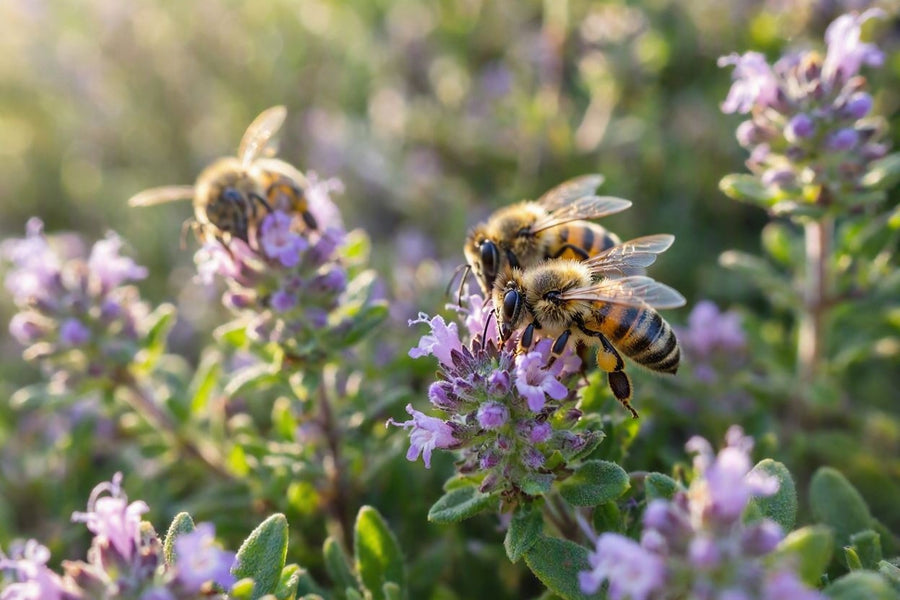
The Pülümür highlands are known for their honey. This comb comes from one mountainside above Yastık village.
Pülümür has a reputation across Türkiye for honey, and it is not an accident of marketing — the district's high meadows carry an unusually dense mix of wild thyme, astragalus and endemic mountain flowers, and the area celebrates it with an annual honey festival.
Hüseyin has counted roughly 18 different wild thyme varieties alone growing across these slopes. That range is what gives the comb its layered, changeable character from batch to batch — no two harvests taste quite the same, because no two seasons flower quite the same.
Most commercial operations feed sugar syrup right through the season. Hüseyin does the opposite: a minimal feed only when the bees would otherwise struggle in early spring, then he steps back and lets a Carniolan colony forage widely and patiently across a mountainside most producers never reach.
He doesn't do it alone. His wife, Kadriye, works the hives beside him every season at Yastık.
Six months on the mountain, in six numbers.
Not marketing claims — a plain description of how this honey is made, so you can judge the quality for yourself.
Raw & unheated
Never warmed above hive temperature during harvest, so nothing is pasteurised or cooked out of it.
Additives
Nothing added, nothing extracted after harvest. What's in the comb is exactly what the bees made.
Wild thyme varieties
Roughly 18 different wild thyme species grow across the Pülümür slopes alone, alongside astragalus and mountain wildflowers — a genuine multi-floral forage, not a single sprayed crop.
Only period fed
Sugar feed is limited to the spring survival window. The rest of the season, the bees forage entirely on their own.
Apiary of origin
Every batch traces to one mountainside above Yastık village — not a blend of imported honey from multiple sources.
Spinning or extraction
Cut straight from the frame, so pollen and wax stay exactly where the bees put them.
These figures describe Hüseyin's process. They are not medical or health claims, and this product is not intended to diagnose, treat, cure or prevent any condition. Moisture content, HMF and pollen-analysis figures will be added once a batch has been lab-tested.
This year's combs — individually numbered, strictly limited.
Every frame is different. Once a batch sells out, it's gone until next August.
 TC-25-SMBACKORDER
Wild Mountain Comb Honey
Small — Sample Piece (~100g) · cut frame● Backorder — ships as soon as availableTC-25-MDBACKORDER
Wild Mountain Comb Honey
Medium — Quarter Comb (~750g) · cut frame● Backorder — ships as soon as availableTC-25-LGBACKORDER
Wild Mountain Comb Honey
Large — Half Comb (~1.5kg) · cut frame● Backorder — ships as soon as availableTC-25-XLBACKORDER
Wild Mountain Comb Honey
Full — Whole Comb (~3kg) · cut frame● Backorder — ships as soon as availableBuying for a shop, hamper brand, or restaurant?
We work with a small number of UK stockists each season. Tell us your volumes and we'll get back to you with pricing and lead times.
Pülümür honey, answered.
What makes Pülümür honey special?
The Pülümür highlands are known across Türkiye for their honey — the district holds an annual honey festival, and its high-altitude meadows carry an unusually rich mix of wild thyme (kekik), astragalus (geven) and other mountain plants. Yastık village sits in this landscape at roughly 1,900m, and that flora is what gives the comb its layered, changeable character from batch to batch.
Where exactly does the honey come from?
A single family apiary at Yastık village, in the Pülümür highlands. The village is in Erzincan province today, though the wider Pülümür area was historically part of Tunceli. Every batch traces to that one mountainside — it is never blended with honey from other sources.
Is the honey raw and unheated?
Yes. It is never warmed above hive temperature during harvest, so nothing is pasteurised or cooked out of it. It is also unfiltered and cut straight from the frame rather than spun, so the pollen and wax stay exactly where the bees put them.
What does "cut comb" mean?
The bees cap each cell with wax when the honey is ready. Those capped frames are then cut by hand rather than spun in an extractor, so what arrives is the comb exactly as the hive built it. The wax comb is entirely edible.
Are the bees fed sugar?
Only a light, minimal feed during the spring survival window, before natural forage is available. Once the mountain flowers open the feeding stops entirely, and the Carniolan colony forages freely across the highlands for the rest of the season.
Is this premium honey?
It is a small-batch, single-apiary, raw comb honey — closer to a single-estate product than to blended supermarket honey. Annual output is roughly one tonne, cut by hand by two people. We would rather describe exactly how it is made and let you judge it than lean on a label.
Why does the honey look or taste different between batches?
Because it is wild-foraged and unblended. Colour, aroma, crystallisation and cell appearance shift with what was flowering that week and where the bees ranged. Variation is a sign the honey has not been standardised, not a fault.
Is crystallised honey still good?
Yes — crystallisation is simply what raw, unheated honey does over time. Stand the jar in warm (not hot) water for a few minutes to soften it. Avoid microwaving, which damages the raw enzymes.
Do you sell wholesale in the UK?
Yes — we work with a small number of UK stockists each season, including shops, hamper brands and restaurants. Use the wholesale enquiry form with your volumes and we'll come back with pricing and lead times.
How is it imported into the UK?
Honey is a product of animal origin under UK import rules, so shipments travel through a registered importer with official health certification and enter via an approved Border Control Post. See our Import & Certification page for the detail.
Who should not eat honey?
Honey must not be given to children under 12 months old. If you are allergic to bee products, pollen or propolis, or are pregnant or immunocompromised, please check with a healthcare professional before consuming. Full allergen information is on our Refund Policy page.